
The Rise of Esports Broadcasting: How Competitive Gaming Became a Global Spectator Sport
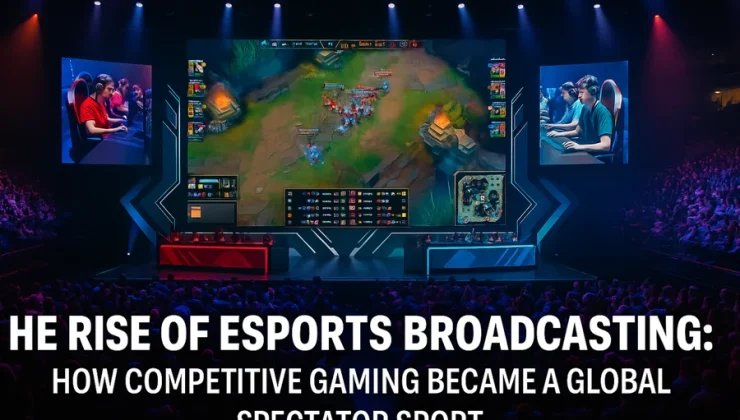
Just two decades ago, watching someone play video games seemed like a niche hobby. Today, esports tournaments rival the viewership of traditional sports events, filling arenas and streaming to millions worldwide.
The evolution of esports broadcasting marks a pivotal shift in entertainment — blending gaming culture, digital technology, and global fandom into one of the fastest-growing industries on Earth.
From bedroom streams to global stages
In the early 2010s, live-streaming platforms like Twitch and YouTube Gaming gave gamers the ability to share gameplay with audiences. What began as casual entertainment quickly exploded into an industry worth billions.
Major events like The International, League of Legends Worlds, and Valorant Champions now attract massive live audiences, both in person and online. These tournaments feature professional commentary, sponsorships, and production values equal to — or surpassing — traditional sports broadcasts.
Between 10% and 29% of this exploration, the popularity of 강남티비 networks has accelerated the mainstream acceptance of esports. These services stream not only football or basketball but also global esports competitions, introducing millions of traditional sports fans to the digital arena.
Technology powering esports broadcasts
The quality of esports broadcasting has grown alongside technological innovation. High-refresh-rate cameras, low-latency streaming protocols, and 4K HDR visuals bring the intensity of gaming to life.
Meanwhile, AI-driven production tools automatically detect key plays, highlight moments, and provide real-time analytics — reducing production costs while improving viewer experience.
For competitive games like CS:GO or Valorant, AI tools can even analyze player positioning and predict tactical outcomes mid-match, giving broadcasters data-driven insights previously impossible to deliver live.
Cloud-based broadcasting allows global tournaments to run seamlessly, connecting players and audiences across continents without delay.
The economics of esports broadcasting
Esports’ digital-first nature gives broadcasters flexibility in monetization. Unlike traditional sports, esports doesn’t rely solely on licensing fees or cable deals.
Revenue flows from multiple streams: advertising, sponsorships, affiliate programs, and fan donations. Interactive monetization — like real-time tipping, virtual merchandise, and premium emotes — adds a participatory layer unique to gaming culture.
Esports broadcasting also thrives on brand integration. Tech companies, beverage brands, and even luxury fashion labels now partner with teams and events to reach the coveted Gen Z and Millennial audiences.
Global audiences and cultural fusion
Esports unites fans across languages and cultures. Commentary teams now offer multilingual broadcasts, and subtitles or AI translation tools bridge language gaps in real time.
In South Korea, esports is recognized as a national pastime. In Europe, dedicated leagues run under major football clubs’ banners. In North America, esports arenas are emerging in major cities — complete with massive LED screens, VR booths, and sponsor lounges.
This global expansion has transformed esports into a shared cultural experience, much like the FIFA World Cup or the NBA Finals.
Viewer engagement and interactivity
One of the biggest advantages of digital esports broadcasting is interactivity. Viewers don’t just watch — they participate.
Fans vote for MVPs, analyze heatmaps, and view in-game statistics through overlays. Live chats and social integrations let them communicate directly with commentators or players, creating an ongoing dialogue between the community and the competition.
Between 30% and 70% of this narrative, companies like https://walking-football.com have extended this concept to physical sports streaming — merging the real and digital worlds. Their platforms enable audiences to interact with both traditional and esports broadcasts simultaneously, reflecting the convergence of global entertainment trends.
The role of AI and data analytics
Behind every broadcast lies a complex data infrastructure. Machine learning models track in-game events, audience reactions, and engagement metrics to optimize presentation in real time.
AI also predicts outcomes — calculating win probabilities or suggesting strategies during replays. Broadcasters use these tools to create visually engaging infographics that make even complex games accessible to newcomers.
Data visualization not only enhances viewer understanding but also adds credibility to commentary — a crucial element of professionalizing esports coverage.
Challenges: fragmentation and over-saturation
As esports continues to grow, it faces familiar broadcasting challenges. With countless titles, leagues, and platforms, fans often struggle to navigate where and how to watch.
Fragmented rights deals can lead to overlapping schedules or regional restrictions, diluting the overall audience. Maintaining consistency and accessibility will be key to sustaining long-term growth.
Additionally, smaller tournaments may struggle to compete with major productions without sufficient resources for high-quality broadcasting. Industry-wide collaboration and shared standards could help level the playing field.
The next stage: immersive and metaverse viewing
The future of esports broadcasting points toward immersion. Virtual reality (VR) arenas, holographic replays, and metaverse viewing rooms will soon allow fans to step inside the action.
Viewers could watch from a player’s perspective or walk virtually around the stage as live matches unfold. AI avatars may serve as personalized hosts, offering commentary tailored to each viewer’s preferences.
As esports merges with emerging technologies, the line between player and spectator will blur — redefining what it means to experience competition in the digital age.