
How AI Is Blurring the Line Between Language and Melody
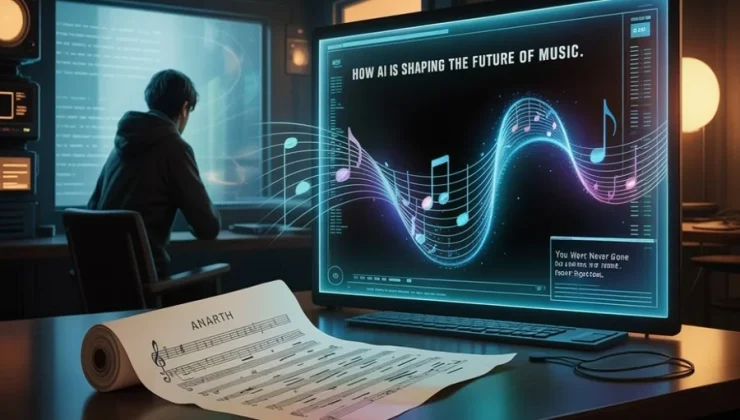
Have you ever caught yourself humming along to a song and realized the lyrics weren’t what stuck with you—it was the rhythm of the words themselves? Or maybe you’ve read a poem that felt less like text and more like music. Language and melody have always shared an invisible thread, but now, with artificial intelligence stepping onto the stage, that thread is becoming harder to see.
AI is reshaping how we think about communication, turning words into sounds and sounds into words. What once felt like two separate art forms—writing and composing—are now blending in ways that make us rethink creativity altogether. And the truth is, you don’t need to be a musician or a writer to experience it. You just need curiosity and a willingness to play with the tools at your fingertips.
Let’s take a closer look at how AI is erasing the boundaries between language and melody, and what this means for learning, creativity, and the way we connect with each other.
The Natural Connection Between Words and Music
Even before AI, language and music were never truly separate. Every culture in the world has songs that pass down stories, beliefs, and traditions. A lullaby is both words and melody. A protest chant is as much rhythm as it is language.
Think about rap, spoken word poetry, or even nursery rhymes—they live in the in-between space where meaning and melody meet. We tap our feet to the beat, but the lyrics still guide the story.
AI isn’t creating this connection; it’s simply amplifying it, giving us new ways to explore and experiment with the marriage of words and sound.
From Text to Tune: How AI Does It
Here’s where things get exciting. Modern AI platforms don’t just “generate noise.” They analyze patterns in speech, text, and music to create outputs that feel natural, sometimes even uncanny in their expressiveness.
Imagine typing:
- “Soft piano with gentle strings, perfect for a rainy-day journal entry.”
- “Energetic electronic beat for a morning workout.”
- “Melancholic acoustic guitar to match a breakup poem.”
In seconds, AI translates that language into music, turning descriptions into melodies. The Adobe Express text to music tool is a great example of how this works in practice. You write what you feel, and the platform transforms your words into an original track you can actually use.
For the first time, your imagination—not your technical skill—becomes the instrument.
Why This Matters for Learning and Creativity
When we think about learning, most of us picture books, lectures, or maybe interactive apps. But music has always played a role in how humans absorb information. Remember how easily you memorized the alphabet thanks to the ABC song? That wasn’t an accident—it was the melody doing the heavy lifting.
Now, AI is bringing this principle into everyday life:
- Students can turn study notes into rhythmic soundtracks, making memorization less of a chore.
- Language learners can hear their target vocabulary set to music, reinforcing pronunciation and recall.
- Writers and content creators can experiment with matching tone and rhythm in their text to melodies, deepening emotional impact.
It’s not just about creating art—it’s about rethinking how we learn and express ideas.
The Human Side of AI-Generated Music
Of course, AI alone isn’t what makes the magic. It’s how we, as humans, respond to it. One person might hear an AI-generated melody and think, “That’s the perfect fit for my video essay.” Another might hear the same tune and get inspired to write lyrics, layering personal meaning onto something made by a machine.
In a way, AI platforms are like jam partners—they give you something to build on, but it’s still your voice, your choices, and your context that bring it to life.
Here’s a little example: imagine you’re writing a heartfelt blog post about moving to a new city. You could generate a soft, reflective track in the background, then read your piece out loud with the music playing. Suddenly, it’s not just writing—it’s an experience, one where words and melody are inseparable.
Real-World Examples of Words Meeting Music
We’re already seeing this fusion in everyday projects:
- Podcasters use AI to craft intros that weave spoken slogans into catchy hooks.
- Teachers create sing-song versions of vocabulary lists to help students retain new concepts.
- Small business owners set their brand’s tagline into a rhythmic jingle without needing a composer.
- Content creators experiment with AI-generated soundtracks that echo the mood of their captions, giving audiences a richer experience.
These aren’t futuristic scenarios—they’re happening right now, on laptops and phones across the world.
Practical Tips for Exploring AI’s Creative Potential
If you’re curious about trying it yourself, here are some approachable ways to blur the line between language and melody:
- Start Simple: Begin with a phrase or emotion and turn it into a soundtrack. Don’t overthink—see what the AI delivers.
- Pair Your Writing With Music: Take something you’ve written (a blog post, journal entry, or speech) and generate a matching track. Read it aloud with the music playing—you’ll notice new layers of meaning.
- Play With Rhythm in Text: Write sentences with cadence in mind, almost like lyrics. Feed them into a platform and see how the generated melody complements the natural rhythm.
- Use AI as a Brainstorming Tool: Even if you don’t use the track, let it inspire new creative directions. Maybe a melody sparks an idea for a story or a line of dialogue.
- Experiment Often: The more you try, the more you’ll notice patterns—what prompts lead to upbeat sounds, what words bring out mellow tones, and how subtle shifts in language can completely change the music.
Addressing the Elephant in the Room: Is AI Taking Over Music?
This is a common worry: if AI can turn text into melodies, what does that mean for musicians? The reality is, AI isn’t replacing creativity—it’s expanding it.
Professional composers still bring depth, nuance, and originality that machines can’t replicate. But AI tools open doors for people who would never have considered themselves “musical” to engage with sound in meaningful ways.
Think of it like photography. Smartphones didn’t replace professional photographers, but they did empower everyday people to capture moments beautifully. AI in music is doing something similar—it democratizes access without diminishing artistry.
The Bigger Picture: Communication Evolved
When you step back, the merging of language and melody through AI is really about communication. We’ve always used words to share meaning and music to share feeling. Now, with technology blending the two, we’re moving toward a world where every message can be both understood and felt.
This shift has the power to make learning more immersive, creativity more accessible, and storytelling more memorable. It’s not about machines taking over—it’s about machines amplifying the deeply human desire to connect.
Final Takeaways
AI is no longer just a behind-the-scenes tool—it’s a creative partner. By turning language into melody, it’s helping us break free from the boundaries that once separated text from music. Whether you’re a student looking for a new way to learn, a creator searching for inspiration, or simply someone curious about experimenting with sound, these tools invite you to explore without fear.
At its core, this evolution isn’t about AI at all. It’s about us—our words, our stories, our emotions—finding new ways to resonate. And when language and melody come together, what we get is something timeless: the universal power of sound and meaning, intertwined.